
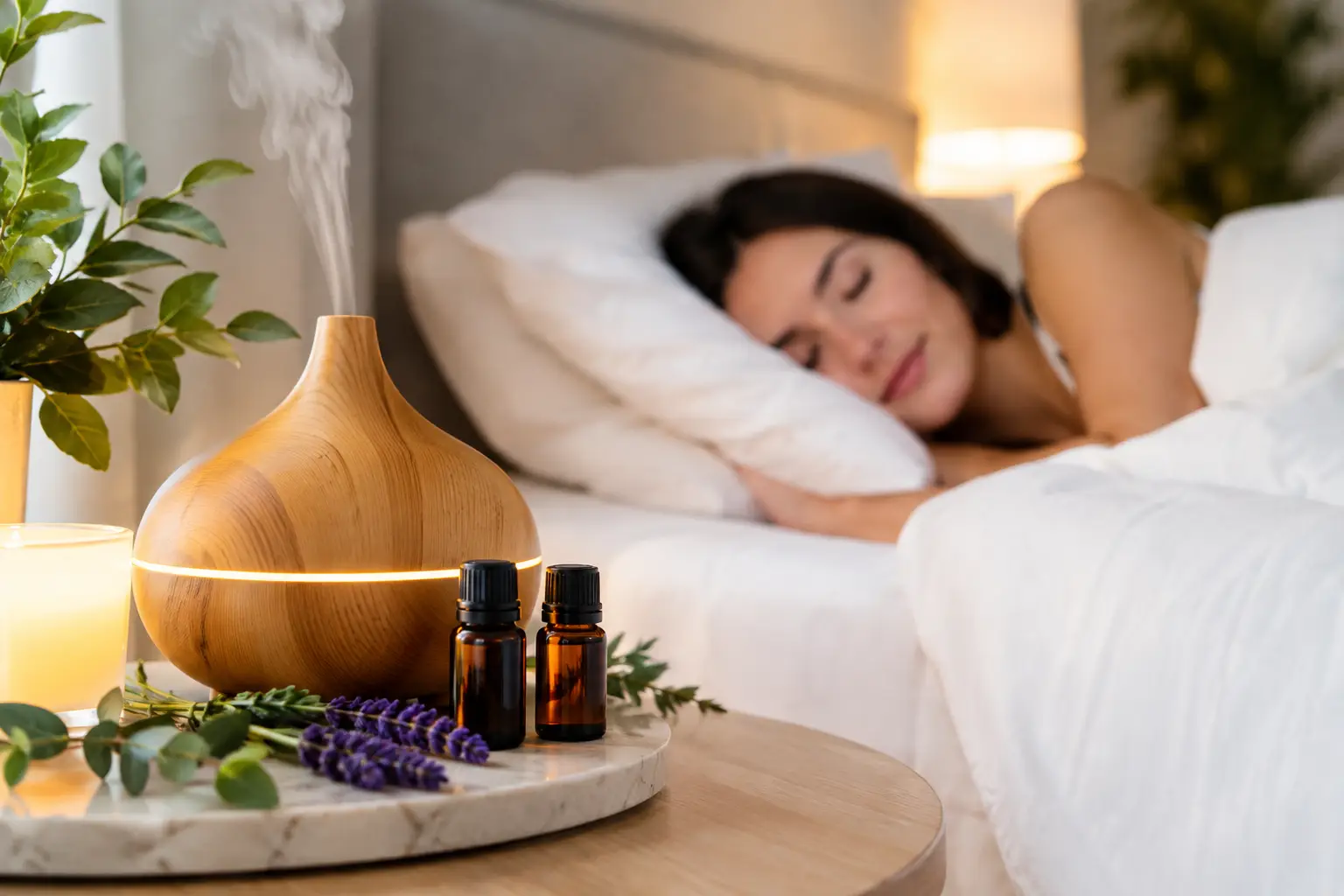
A bedroom can be perfectly quiet and still feel far from restful when the mind is carrying the pace of the day. A familiar, soothing scent can offer a gentle cue that it is time to soften, slow down, and return to yourself. But does aromatherapy improve sleep quality, or does it simply make a bedtime routine feel more luxurious?
The most honest answer is that it can help, particularly when sleep is being disturbed by everyday stress, racing thoughts, or difficulty settling into a restful mood. Aromatherapy is not a cure for persistent insomnia, nor does it replace professional care when sleep problems are ongoing. Its value is subtler and, for many people, deeply meaningful: it can become part of an intentional ritual that helps the body recognize that rest is near.
Does Aromatherapy Improve Sleep Quality?
Research on aromatherapy and sleep is promising, though not definitive. Certain essential oil aromas, especially lavender, have been associated with feeling calmer before bed and with modest improvements in perceived sleep quality for some people. The experience is personal. One person may find lavender instantly comforting, while another responds more beautifully to the warm, grounding character of cedarwood or the soft floral notes of neroli.
Scent reaches us quickly. When you inhale an aroma, it is processed in areas of the brain connected with emotion, memory, and relaxation. That does not mean an essential oil can force sleep to arrive. It can, however, help create the emotional conditions in which sleep feels more accessible: less alertness, fewer signals of urgency, and a stronger sense of safety and ease.
The ritual matters as much as the fragrance. If you use the same calming scent while lowering the lights, putting away your phone, and taking several unhurried breaths each evening, your mind may begin to associate that combination with winding down. Over time, this consistency can be more supportive than searching for one perfect oil.
The Scents Often Chosen for Rest
Lavender is the most recognized choice for bedtime, and for good reason. Its clean, herbaceous-floral aroma feels familiar to many people and is often used to encourage a quieter state of mind. It is a graceful place to begin if you are new to aromatherapy.
Roman chamomile has a softer, apple-like floral scent that can feel especially comforting after an emotionally demanding day. Neroli, distilled from bitter orange blossoms, brings a delicate floral-citrus note that suits those who find lavender too traditional or too sweet. Sandalwood and cedarwood offer a warmer, more grounding direction, with an earthy presence that can make an evening space feel settled and cocooning.
There is no universal “best” scent for sleep. The aroma you genuinely enjoy is more likely to become part of a ritual you keep. If a scent feels overpowering, sharp, or unpleasant, it is not the right choice for your room, regardless of its reputation. A restful environment should never feel like a perfume counter.
Create a Bedtime Ritual, Not a Perfect Routine
Aromatherapy works best as an invitation rather than another item on a demanding wellness checklist. Start about 30 to 60 minutes before you hope to sleep. Dim the room, set aside stimulating tasks, and introduce one scent in a quiet, uncomplicated way.
A diffuser can be lovely, but it is not essential. You might place one or two drops of a properly diluted blend on a tissue near your bedside, use a linen mist formulated for fabrics, or enjoy a warm bath with a product specifically designed for bath use. The goal is gentle ambient scent, not a cloud of fragrance that fills every corner of the room.
Pair the aroma with a small act of care. Sip caffeine-free tea, massage your hands with an unscented or lightly scented body oil, stretch your shoulders, or place a warm compress over tired eyes. These moments give the nervous system a chance to move out of the day’s momentum. Even five attentive minutes can feel like a meaningful pause.
At Atmana Wellness and Spa, this is the spirit behind aromatherapy within a treatment ritual: scent is not treated as a quick fix, but as one thoughtful element of a wider experience of therapeutic touch, stillness, and renewal. At home, you can create your own quieter version of that intention.
How to Use Essential Oils Safely at Night
Natural does not automatically mean risk-free. Essential oils are concentrated plant extracts, and a little goes a long way. More fragrance will not create deeper rest and may trigger headaches, nausea, or irritation in sensitive people.
For topical use, always dilute essential oils in a carrier oil or use a finished product that has already been safely formulated. Avoid applying undiluted oils directly to your skin, especially on the face, near the eyes, or on broken skin. A patch test is wise when trying a new blend.
Use a diffuser according to its directions and keep the room comfortably ventilated. It is generally best to diffuse for a limited period as you prepare for bed rather than running it continuously all night. If you live with a partner, child, pet, or anyone with asthma, allergies, migraines, or scent sensitivities, ask for their comfort level before making fragrance part of the shared space.
Pregnancy, breastfeeding, certain medications, and health conditions can affect which oils are appropriate. When in doubt, speak with a qualified health professional or a trained aromatherapy practitioner. Never ingest essential oils unless you have received individualized guidance from a properly qualified clinician.
When Aromatherapy May Not Be Enough
If you regularly lie awake for long periods, wake often through the night, snore loudly, gasp for air, or feel exhausted despite adequate time in bed, it is worth looking beyond a bedtime scent. Sleep difficulties can be related to stress, anxiety, sleep apnea, medication, pain, hormonal changes, or other health concerns that deserve attentive support.
Aromatherapy can still be a nurturing companion during this process, but it should not carry the burden of solving a more complex issue. Consider it one layer of care alongside a steady sleep schedule, morning daylight, movement, a comfortable sleep environment, and professional guidance when needed.
It also helps to be patient with your expectations. Some evenings, a calming aroma may make a noticeable difference. On others, it may simply offer a few peaceful breaths before sleep arrives in its own time. That is still worthwhile. Rest is not always something to achieve; sometimes it begins by giving yourself permission to be unhurried.
A Softer Way to End the Day
Choose one scent that feels comforting rather than impressive, and let it become your evening signal. Keep the ritual simple enough to repeat on an ordinary Tuesday, after a late meeting, or when city life has left your thoughts feeling a little too full. With care and consistency, that small sensory pause can become a beautiful way to meet the night: grounded, softened, and ready to rest.