
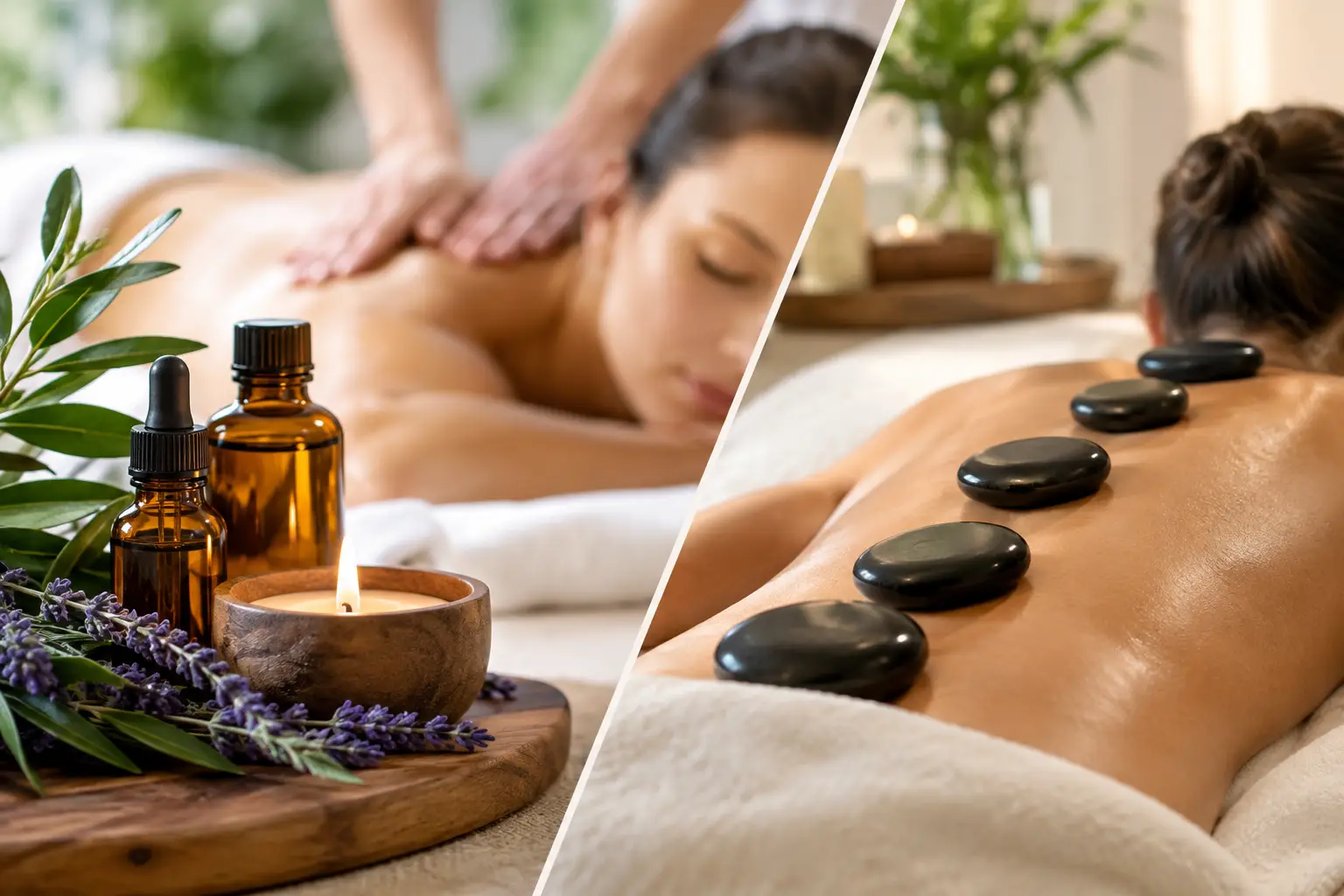
Some days, your body asks for more than a standard massage. It may crave the quiet comfort of warm stones resting along tired muscles, or the soft exhale that comes with an aroma chosen to steady the mind. When considering aromatherapy massage versus hot stone massage, the right choice is less about which treatment is better and more about what kind of restoration you need in this moment.
Both experiences invite you to slow down. Both can ease the feeling of holding too much in your shoulders, back, and mind. Yet they create calm through different pathways: aromatherapy works through intentional touch and scent, while hot stone massage uses carefully placed heat to encourage deeper physical release.
Aromatherapy Massage Versus Hot Stone: The Essential Difference
An aromatherapy massage begins with the sensory atmosphere of essential oils. Your therapist may select an aroma that feels grounding, refreshing, soothing, or gently uplifting, then incorporate it into the massage through a diffuser, inhalation, or diluted massage oil. The massage itself can be tailored from light and flowing to more focused, depending on your comfort and areas of tension.
Hot stone massage centers on temperature. Smooth stones are warmed and placed at selected points on the body or used as an extension of the therapist’s hands. The gradual heat helps muscles soften before deeper work begins, which can make the treatment feel especially comforting when your body feels stiff, chilled, or overworked.
The distinction is subtle but meaningful. Aromatherapy creates a more immersive mind-body experience, where scent can shape the emotional tone of your time on the table. Hot stones create a deeply physical sensation of warmth, heaviness, and release. One is often chosen for an emotional reset; the other is often chosen for muscular comfort. Of course, your experience may overlap beautifully.
Choose Aromatherapy When Your Mind Needs to Settle
Aromatherapy massage is a lovely choice when stress feels mental as much as physical. Perhaps your calendar has been full, your thoughts have followed you home, or you simply want to feel present again. A carefully selected scent can become part of the ritual – a signal that you have permission to pause.
The experience tends to feel personal and atmospheric. The aroma is not there merely to make the room smell beautiful. It can help create an association between breath, touch, and rest. For guests who find it difficult to switch off, that sensory cue can make it easier to arrive fully in the treatment.
This style of massage also suits someone who prefers a lighter touch or wants a flexible session. Your therapist can focus on long, nurturing movements, spend more time on the scalp or hands, or direct attention toward the areas that hold the day’s tension. The goal is not intensity for its own sake. It is to leave you feeling clearer, softer, and more connected to your inner self.
Aromatherapy may be particularly appealing before a special occasion, after an emotionally demanding week, or when you want your massage to feel like a complete sensory retreat. If you are sensitive to fragrance, have allergies, are pregnant, or have a skin condition, share that before your treatment. A thoughtful therapist can adjust the oils used, reduce the scent, or create a beautiful experience without aromatic products.
Choose Hot Stone When Your Body Feels Heavy or Tight
Hot stone massage offers a different kind of invitation: let warmth do some of the work. The stones are heated to a safe, comfortable temperature, never meant to feel sharp or overwhelming. As they rest on or glide across the body, they bring a slow, enveloping warmth that many guests find deeply reassuring.
This can be an especially satisfying choice after long hours at a desk, a demanding workout routine, travel, or a stretch of cold Toronto weather. When muscles feel guarded, warmth may help you relax into the massage more easily. Your therapist can then work with a sense of depth without relying solely on firm pressure.
For some people, hot stone massage feels more substantial than aromatherapy massage. There is a grounded quality to the stones: their weight, their warmth, and the unhurried pace all encourage the body to let go. If you are seeking relief from general stiffness rather than a scent-led emotional reset, this may be the ritual that feels most nourishing.
There are times when heat is not the best fit. If you have reduced sensitivity to temperature, active inflammation, certain circulation concerns, very sensitive skin, or a health condition affected by heat, ask your healthcare professional and tell your spa therapist before booking. A personalized treatment should always honor what feels safe and supportive for your body.
Consider the Feeling You Want to Carry Home
The most useful way to choose is to imagine the end of your treatment. Do you want to leave feeling serene, airy, and emotionally reset? Aromatherapy may be calling you. Do you want to leave feeling warm through your muscles, deeply loosened, and ready to move with more ease? Hot stone massage may be the better match.
Your preference for pressure matters, too. Aromatherapy massage often pairs naturally with gentle to medium pressure, though it can certainly be customized. Hot stones can make moderate pressure feel more effective because the muscles have already been warmed. Neither treatment has to be painful to feel meaningful. A skilled massage is responsive, not performative.
Also consider how you respond to sensory experiences. Some guests love a signature aroma and find scent is central to relaxation. Others prefer minimal fragrance but adore the physical comfort of heat. There is no right answer, only the experience that helps you return to balance.
Can You Combine Aromatherapy and Hot Stones?
In many spa settings, the answer is yes. Aromatic oils and warm stones can complement one another when used with care. This combination can feel wonderfully indulgent: scent quiets the mind while heat settles the body. It may suit someone who has been carrying stress everywhere – in busy thoughts, a clenched jaw, and shoulders that seem permanently lifted.
Still, more is not always better. If you are new to massage, sensitive to fragrance, unsure how you tolerate heat, or simply craving something uncomplicated, choose one primary focus. A quieter ritual can be just as restorative. Your therapist can guide the details after a conversation about your needs, comfort, and desired outcome.
At Atmana Wellness and Spa, every ritual begins with intention, including a soothing foot soak that helps you transition out of the pace of the city. That first moment of grounding is valuable whether you choose aromatic relaxation, warming stone therapy, or a personalized blend of both.
How to Make Your Massage Feel Truly Personal
A few honest details at the beginning of your appointment can transform the experience. Let your therapist know where you feel tension, whether you prefer quiet or gentle conversation, and how you generally respond to scent and heat. Mention recent injuries, skin sensitivities, pregnancy, medications, or health concerns that could affect your treatment.
During the massage, keep communicating. The perfect stone temperature for one person may feel too warm for another. A fragrance that feels calming at first may become too strong after an hour. Asking for an adjustment is not interrupting the ritual – it is part of receiving thoughtful care.
Give yourself a little space afterward, if you can. Sip water or tea, move slowly, and resist the urge to rush straight into the next demand. The value of massage is not only in the treatment room. It is in the softer pace you allow yourself to keep afterward.
Your choice between aromatherapy and hot stones can change from visit to visit. Let your body and inner self lead the way: choose scent when you need to breathe deeper, choose warmth when you need to soften, and choose care that leaves you feeling quietly renewed.